
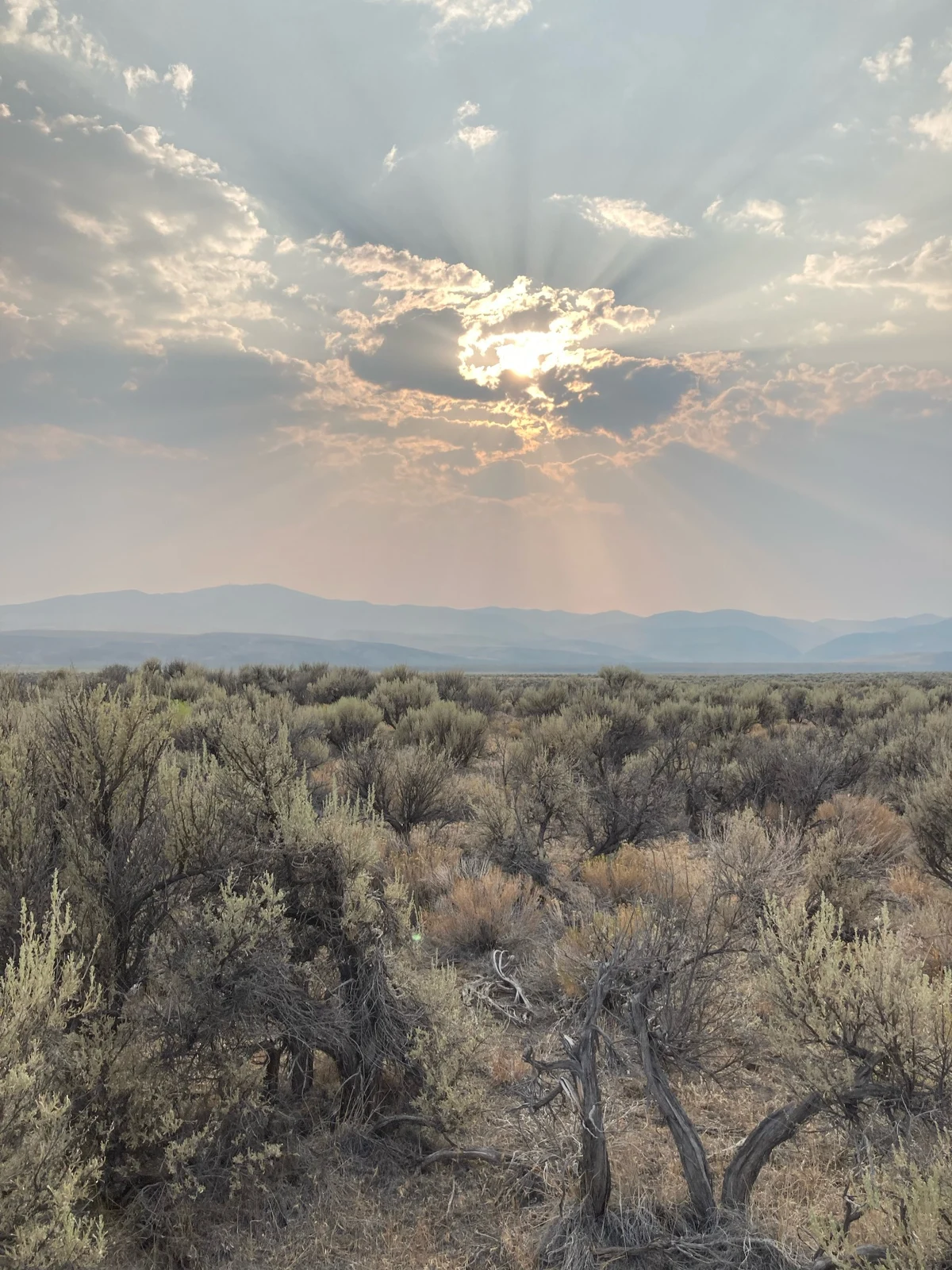
Big sagebrush anchors a vast western ecosystem. Its three widespread subspecies often occur near one another, yet differ in their genetics, chromosome numbers, and the environments where they thrive. Those differences matter when choosing seed for restoration.
What we are studying
We analyzed genetic data from 627 plants in 64 populations spanning the geographic and environmental ranges of basin, Wyoming, and mountain big sagebrush. The study asks how distinct these subspecies are, where they exchange genes, and whether differences in ploidy—the number of chromosome sets—help explain those patterns.
What the data show
The subspecies are genetically distinct despite extensive overlap in their distributions. In some cases, plants from different subspecies less than one kilometer apart differ more than populations of the same subspecies separated by over 1,000 kilometers. Their genetic patterns also track different environmental conditions.
Gene flow is limited and appears more likely between populations with the same ploidy level. Basin big sagebrush is diploid, Wyoming big sagebrush is tetraploid, and mountain big sagebrush can be either. This suggests that chromosome number, along with environment, helps shape where exchange can occur.
Why it matters for restoration
Subspecies identity, ploidy, and environmental fit can all affect whether plant materials are suited to a restoration site. These factors are especially useful to consider where subspecies grow together or are difficult to distinguish. At the same time, natural gene flow is part of big sagebrush's history. Our goal is to turn these range-wide patterns into better guidance for seed sourcing and restoration planning.
This study builds on published research on mosaic hybrid zones. The range-wide study described here is in review.