A species with a narrow range
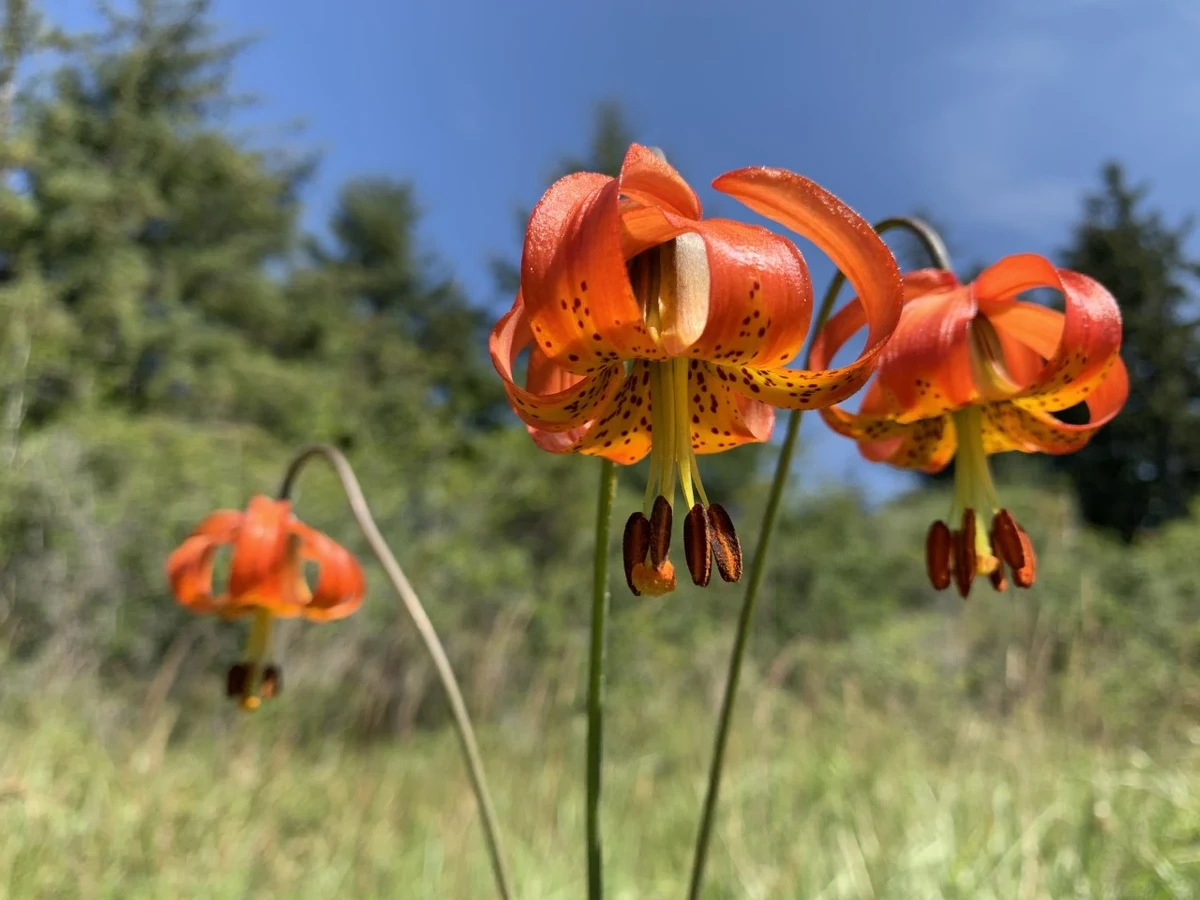
Western lily (Lilium occidentale) is federally endangered. It occurs along a narrow stretch of the Pacific coast from southwestern Oregon into northern California, often in open, moist habitats such as coastal prairie, wetlands, and scrub. Its long-term persistence depends in part on maintaining suitable habitat and healthy populations across that small range.
Recovery planning has long identified genetic diversity and the movement of seeds or plants among populations as important considerations. Better genetic information can help partners evaluate how populations are related and guide future propagation and conservation choices.
The tiger lily question
Western lily can grow near tiger lily (Lilium columbianum), also called Columbia lily. The two may hybridize where their ranges meet. Earlier U.S. Fish and Wildlife Service reviews describe apparent hybrids and genetic patterns that raise questions about how often genes move between the species. They also note that hybridization has not been shown to pose an immediate threat to western lily. That distinction matters: the presence of an intermediate-looking flower alone cannot tell us the amount, direction, or conservation significance of gene flow.
A study with samples from western lily, tiger lily, related lilies, and plants suspected to be hybrids can test these relationships more directly. It can also examine variation within western lily and how strongly its populations are connected.
What we are doing now
The planned first phase focuses on the foundation for later analysis: reconciling and tracking tissue samples, extracting and checking DNA, preparing a sequencing library, arranging sequencing, and delivering the raw data and quality-control records.
The next phase of work will ask where genetic diversity is concentrated, whether small populations show signs of inbreeding, how much movement has occurred among populations, and whether suspected hybrids carry ancestry from both western lily and tiger lily. These questions can help inform propagation, seed or plant movement, and long-term recovery planning.
Background reading
The laboratory and sequencing phase is being prepared. No new genetic results or management recommendations are reported here.