The question
Seeding is a common response to wildfire and other disturbances, but a green treatment area does not tell us which plants came from the seed mix. Locally occurring plants may survive, regrow, or recruit after treatment. Plants descended from introduced seed may establish, spread beyond the treatment boundary, or cross with local plants. These outcomes matter for evaluating a project and choosing plant materials for future work.
Our study asks three related questions: Did the seeded genotypes establish within treatment areas? Are they found outside those areas? And is there evidence that restoration and local wild genotypes have hybridized? We also want to understand how site climate and weather around the year of seeding may shape those outcomes.
How we are studying it
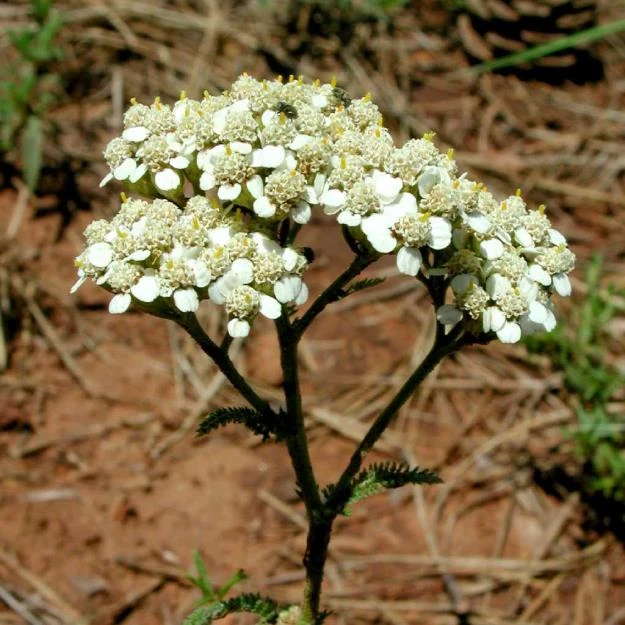
We are examining four native perennial species at four seeding projects in Utah: common yarrow, James’ galleta, Indian ricegrass, and fourwing saltbush. Each project had been completed at least five years before field sampling in 2020. We collected plant tissue both inside and outside treatment boundaries and compare genetic patterns with available wild and restoration material references. Those comparisons can help distinguish local wild genotypes, restoration-associated genotypes, and plants with mixed ancestry.
Genetic assignments are interpreted alongside treatment records and site conditions. A single sampling period can show where different genotypes occur, but it cannot by itself establish when an individual arrived or whether one genotype performs better over the long term.
An example from common yarrow
This working map from the Horse Valley Fire Area seeding project shows how samples can be viewed in relation to a treatment boundary. The symbols distinguish plants assigned to a cultivar genotype, local wild genotype, or putative hybrid ancestry. The map illustrates the kind of question genetic monitoring can address: where did restoration-associated genotypes occur relative to the seeding footprint?
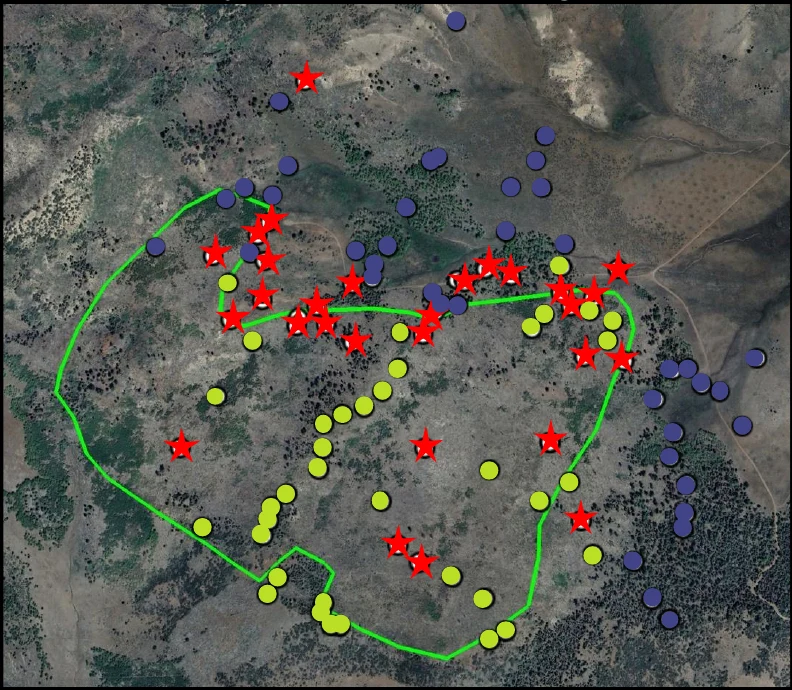
- Green circles: cultivar genotype
- Red stars: hybrids
- Blue circles: wild genotype
What this work could provide
Across the case studies, genetic monitoring could clarify how often seeded material becomes established, whether its descendants extend beyond treatment areas, and whether introduced and local plants contribute to subsequent generations together. Comparing outcomes across sites may help refine choices about species, seed sources, timing, and where seeding is likely to add value.
The project is also developing a practical approach for incorporating genetic monitoring into restoration: documenting seed sources and treatment boundaries, collecting samples where the key comparisons can be made, and interpreting genetic patterns with field and treatment records. These lessons can help managers evaluate past seeding investments and design stronger monitoring for future projects.
This manuscript and its analyses are still in development. The map is a working illustration, and project-wide results will be updated as the study is finalized.