
Landscape Stewardship Collective Research Scientist Dr. Trevor Faske has received a fellowship from the Northwest Climate Adaptation Science Center (NW CASC) to help land managers choose sagebrush seed sources for a changing climate. His project connects research on native plants with the decisions that shape restoration across the Northwest.
Finding the right sagebrush for tomorrow’s landscapes
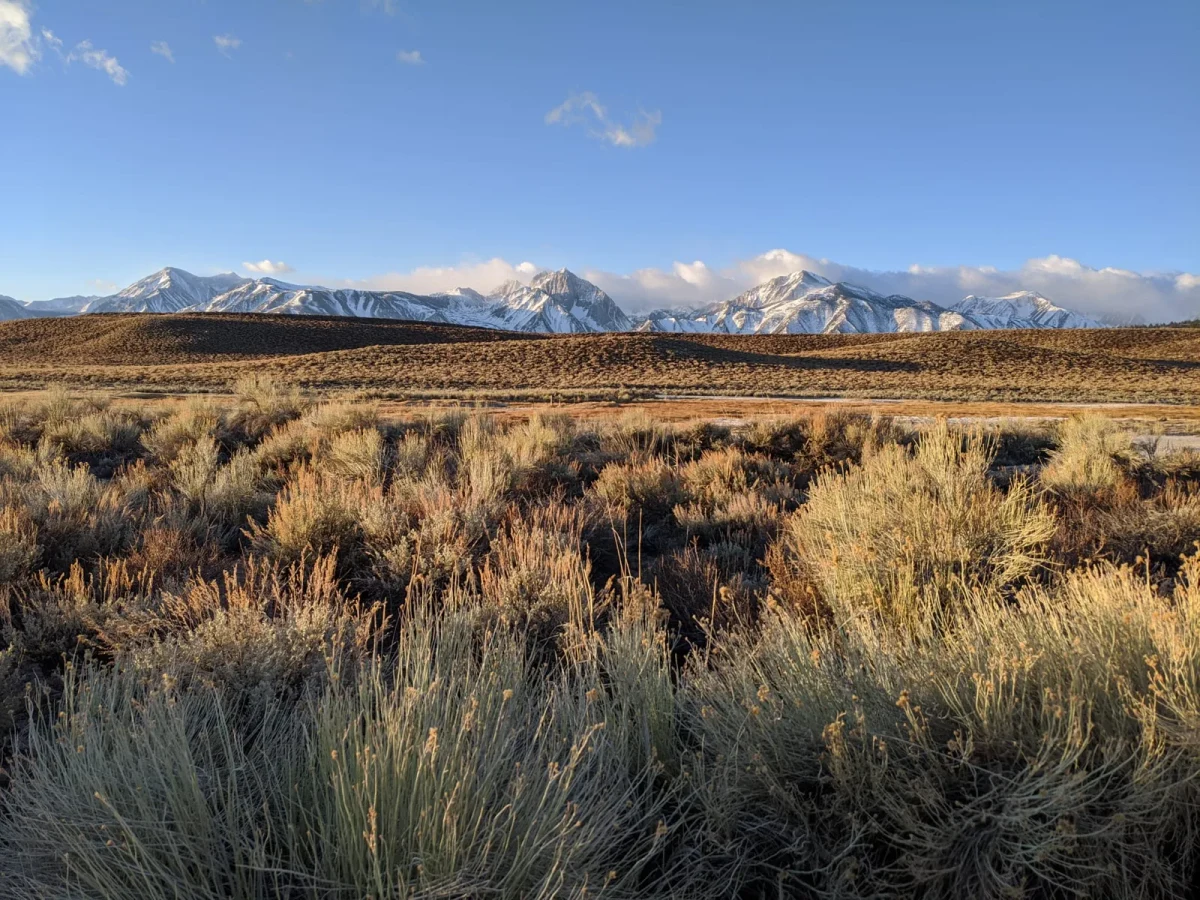
Sagebrush landscapes support wildlife, working lands, and communities, but wildfire, invasive species, and drought are making them increasingly difficult to restore. Choosing where restoration seed comes from is part of that challenge: sagebrush populations differ in the conditions they are suited to, and plants that do well at a site today may face very different conditions in the future.
Trevor will examine big sagebrush across the Northwest. The project brings together genetic information from hundreds of plants with data on climate, soils, and water availability to understand how populations differ and where they may be vulnerable as conditions change.
Developing guidance with land managers
Researchers, federal scientists, land managers, and nonprofit partners will help shape the work throughout the project. Collaborations with U.S. Geological Survey scientists will connect information about sagebrush populations with detailed estimates of drought and soil water conditions.
The project aims to produce maps and web-based tools that help managers identify seed collection and planting areas, recognize populations that may be vulnerable to future conditions, and evaluate where conservation or restoration actions may be useful. By developing these tools with the people who will use them, the work aims to make research more useful for day-to-day decisions and long-term planning.
Trevor is also a postdoctoral research fellow at the University of Montana, where he works with Dr. Akasha Faist. His research connects evolutionary biology with practical approaches to native plant restoration and conservation.