
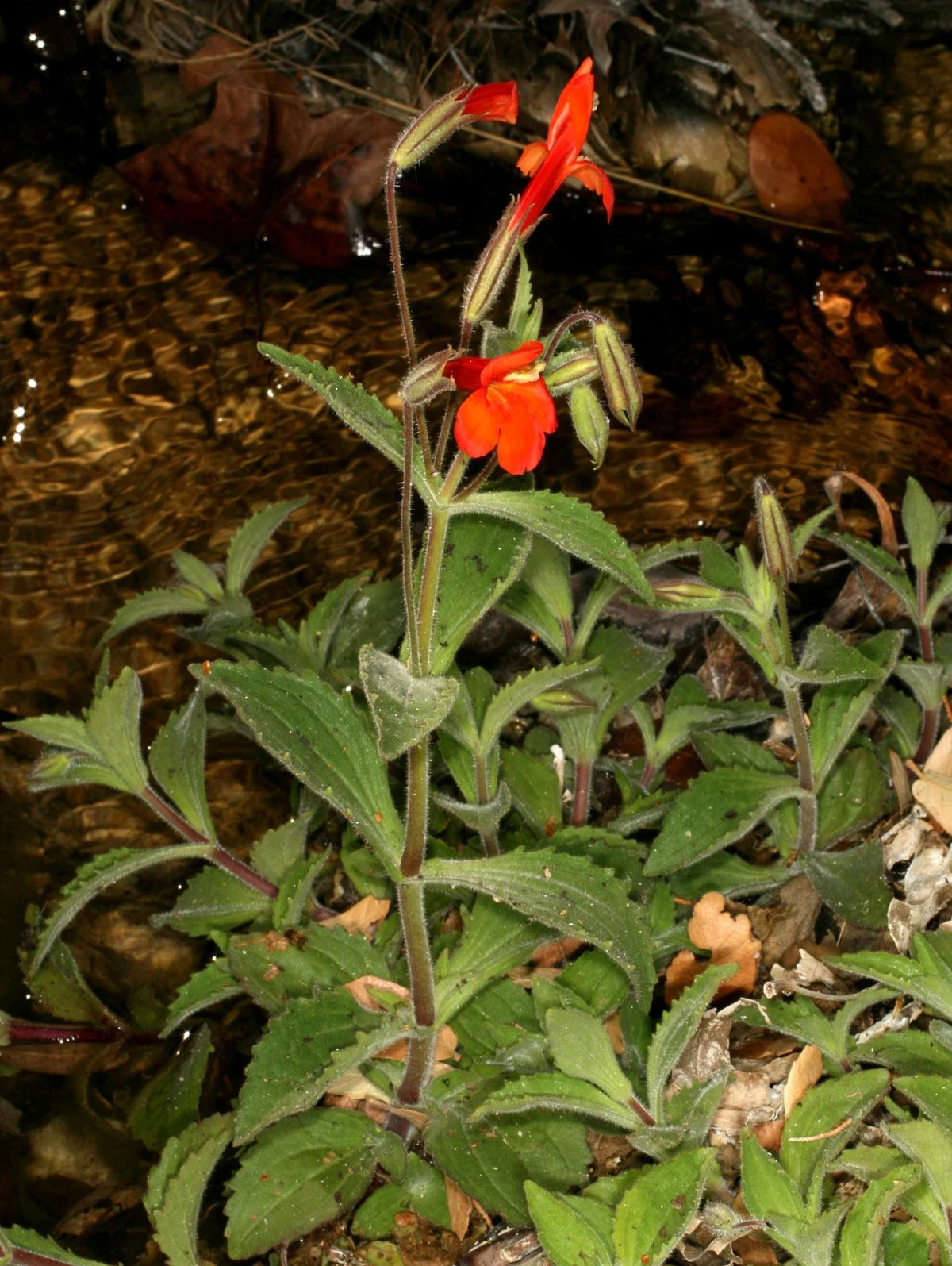
Desert springs and seeps support plant populations separated by stretches of dry landscape. A new study examines how that patchwork of habitat, together with differences in climate, shapes genetic variation in crimson monkeyflower (Mimulus verbenaceus).
What the study examined
Published in Annals of Botany, the research brought together Matthew Weiss and Liza Holeski of Northern Arizona University and LSC Research Scientist Trevor Faske. The team analyzed genetic data from 175 plants across 17 populations.
What the researchers found
The researchers found strong genetic differences among populations at both regional and local scales. Connections along waterways helped explain local patterns, while regional differences were also associated with temperature, humidity, and monsoon climate.
What this means for conservation
For conservation, these findings raise practical questions about which populations to protect and how to select sources for propagation or restoration. Sampling across multiple springs and climatic settings may help capture variation that a smaller collection could miss. Decisions about moving plants among sites would still require evidence about habitat suitability and the consequences of mixing sources.
The study highlights why spring-dependent plants deserve conservation approaches that account for their isolated habitats and genetic differences.
Research article
Climate Gradients and Habitat Discontinuity Structure Genetic Variation in a Spring-Specialist Plant
Weiss M., Faske T.M., and Holeski L.M. (2026). Annals of Botany, mcag291. Published online September 9, 2026.